Choose timezone
Your profile timezone:
Service Outage (Emergency Security Update) : Conference Indico will be unavailable between 12:00 - 13:00 on Thu, 29th Oct 2026 (JST).
KEK Theory Workshop is an annual workshop on string theory and quantum field theory. Since KEK Theory Workshop 2014, it has been held as an international workshop. This year we aim to provide a valuable opportunity to have extensive discussions on new developments in string theory, matrix models, the gauge-gravity duality, black-hole microstates, lattice construction of chiral gauge theories, and open quantum systems. The invited speakers are selected from various research fields, and we have asked them to give a pedagogical exposition of the big picture in their own research field with the right amount of technical details, which are useful in building up a comprehensive understanding of the notions and their mutual relationship.
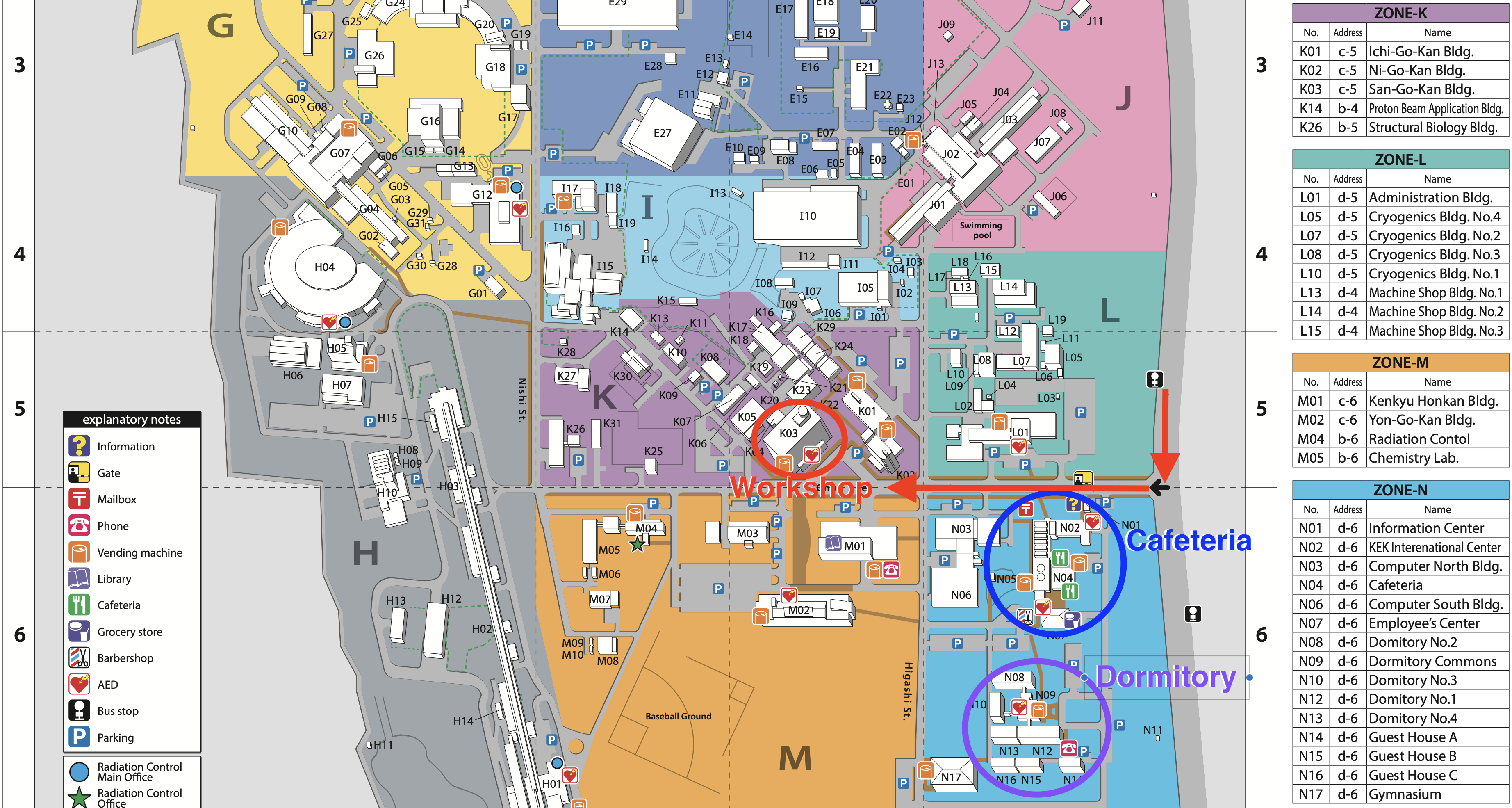
The workshop will be ON-SITE at KEK Tsukuba Campus on November 25 (Wed.) – 27 (Fri.), 2026, without online attendance. Please visit K03 Building.
This workshop is jointly organized by the KEK Theory Center and RIKEN iTHEMS, with generous financial support from RIKEN iTHEMS.


List of invited speakers and tentative titles:
"6d/5d gauge theories from web diagrams"
"Emergence of space-time and matter from matrix model"
"Information theoretic approaches to closed universe"
"Open quantum systems: From many-body physics to feedback control"
"Microstates of black holes and of whatnot"
"New de Sitter space holography from time-like entanglement"
"Optimal transport, holography and quantum chaos"
"Advances in Hamiltonian lattice theory for realizing chiral gauge theories"
Short Talks:
We will arrange short talk sessions on more diverse topics, for which participants can apply.
If there are too many applicants, we will have to make a selection.
Registration Deadline: October 16 (Friday), 2026
Notice:
Scam Email Warning:
Please be aware of potential scams claiming to make housing reservations on your behalf.
We were made aware of some participants receiving such messages from "Conferences@reservationsmanagement.org" or similar addresses. Please ignore such emails and do not reply, do not click shared links, and do not provide your credit card information.
Organizers:
Chien-Yu Chou (RIKEN iTHEMS)
Yuta Hamada (KEK/RIKEN iTHEMS)
Kohtaroh Miura (University of Tsukuba/KEK)
Jun Nishimura (KEK)
Hiroki Ohata (KEK)
Wei-Hsiang Shao (RIKEN iTHEMS)
Daichi Takeda (RIKEN iTHEMS)
Secretary:
Yuko Ohno (Ms.) yukoohno[at]post.kek.jp
(Please replace [at] with @.)
Open quantum systems are quantum systems that interact with their surrounding environments. Their nonunitary dynamics alter fundamental concepts in many-body physics, such as symmetry and spontaneous symmetry breaking. In this talk, I will first review some basic concepts of open quantum systems, including quantum channels, quantum master equations, and their symmetries. I will then discuss several recent developments in this field, ranging from exotic renormalization-group flows and strong-to-weak spontaneous symmetry breaking to topological feedback control.
A (left): K03 Seminar Hall. B (right): K03 Meeting Room I.
| Row | Date and time (JST) | A (left) | B (right) |
|---|---|---|---|
| I | 25 Nov, 14:50–16:30 | IA | IB |
| II | 25 Nov, 16:50–18:10 | IIA | IIB |
| III | 26 Nov, 14:50–16:30 | IIIA | IIIB |
| IV | 26 Nov, 16:50–18:10 | IVA | IVB |
We describe how an expanding and asymptotically flat 3+1 dimensional homogeneous and isotropic spacetime arises from the IKKT matrix model at one loop, within a weak coupling regime. Some aspects of the emergent gravity theory are also discussed, which deviates form general relativity in the extreme UV and IR regimes.
In the Lorentzian IKKT theory, space and time are not assumed in a priori but are described by the dynamics of matrices. Since classical saddles are expected to be the dominant contributions to path integral, it is crucial to solve the equations of motion for these matrices that describe spacetime. In this work, we apply Lie-algebraic ansatz to solve the Lorentzian IKKT matrix model. Through the ansatz, we are able to single out a non-trivial (non-nilpotent) 10D saddle.
Recently, the construction of three-dimensional conformal field theories (3D CFTs) using interacting fermions in the lowest Landau level on a sphere has attracted considerable attention. Although this approach is known as fuzzy-sphere regularization, it differs from conventional field theories on the fuzzy sphere. In this talk, we investigate the universality of this construction by introducing symmetry-preserving deformations of the Hamiltonian. Through exact diagonalization, we find that the low-energy spectra of the deformed models remain consistent with the 3D Ising CFT, providing evidence for universality. We then show that the deformed models can be reformulated as matrix–vector models and, upon integrating out the fermionic vectors, as matrix models. Our results thus provide a new matrix-model realization of the 3D Ising CFT, distinct from conventional fuzzy-sphere field theories.
Homotopy algebras provide a universal algebraic framework for constructing correlation functions in quantum field theory. Motivated by the study of open–closed duality from the perspective of string field theory, we aim to incorporate the 1/N expansion into this framework. As a first step, we propose an algebraic formula for perturbative correlation functions in the large-N limit of a zero-dimensional matrix model. In this framework, perturbative correlation functions are constructed algebraically using operators that encode the kinetic term, interactions, and Wick contractions. Rather than computing correlation functions at finite N and subsequently taking their large-N limit, we implement the large-N limit directly at the operator level. This is achieved by modifying the operator responsible for Wick contractions, without changing the operators encoding the kinetic and interaction terms. We demonstrate our formula through explicit calculations in free and interacting theories. Furthermore, we show that the resulting multi-trace correlation functions satisfy the large-N Schwinger–Dyson equations and that large-N factorization follows from the algebraic structure of the formula.
String Field Theory (SFT) aims to provide a non-perturbative formulation of string theory, and various types of actions have been constructed within this framework. Understanding the transformations between these actions leads to the unification of different formulations, the clarification of correspondences, and the proof of their equivalence. In recent years, T.Erler and H.Matsunaga have clarified the transformation between Witten-type SFT and light-cone SFT; however, the relationship with OSp-invariant SFT remains unclear. In this talk, I will discuss the BRST charge similarity transformations related to OSp-invariant SFT. This research is based on collaborative work with Y. Ando (Tohoku University).
A (left): K03 Seminar Hall. B (right): K03 Meeting Room I.
| Row | Date and time (JST) | A (left) | B (right) |
|---|---|---|---|
| I | 25 Nov, 14:50–16:30 | IA | IB |
| II | 25 Nov, 16:50–18:10 | IIA | IIB |
| III | 26 Nov, 14:50–16:30 | IIIA | IIIB |
| IV | 26 Nov, 16:50–18:10 | IVA | IVB |
Understanding the microscopic origin of confinement and the other gapped phases in four-dimensional Yang–Mills theory remains a central challenge. The Wilson–’t Hooft classification constrains these phases through the behavior of electric and magnetic line operators. The Cardy–Rabinovici model provides an abelian setting in which to study confinement, oblique confinement, and duality. In our previous work, we formulated its two-dimensional reduction on a modified Villain lattice and studied its exact dualities, symmetries, and phase structure. That analysis also highlighted a limitation: the abelian model does not realize every gapped phase allowed by the Wilson–’t Hooft classification. In this talk, we will discuss an approach based on a semi-Abelian theory motivated by compactifying four-dimensional Yang–Mills theory. Its low-energy description contains abelian holonomies together with permutations of their color eigenvalues. This structure admits twist vortices associated with those permutations. We will examine how these defects and their screening affect the vacuum structure, and whether they can provide a route to gapped phases inaccessible in the abelian Cardy–Rabinovici model.
Symmetric mass generation (SMG) is a mechanism for opening a gap without spontaneous symmetry breaking, first demonstrated by Fidkowski and Kitaev in a one-dimensional Majorana-chain model. We formulate the model as a Euclidean path integral on a two-dimensional lattice, with and without domain walls. Our numerical results show that four-fermion interactions can gap out the Majorana mode localized on one wall, while the mode on the opposite wall remains a free massless fermion. This suggests a possible approach to removing unwanted mirror fermions without breaking symmetry.
Recently, lattice formulations of two-dimensional chiral gauge theories via bosonization have been developed. These formulations are based on boson–fermion duality in the continuum limit. In this talk, we present a lattice construction of the gauged Wess–Zumino–Witten (WZW) model for two-dimensional $SU(N)$ chiral gauge theories. The WZW model contains a three-dimensional bulk contribution that reflects the gauge anomaly of chiral fermions. We show that the bulk dependence associated with the gauge anomaly cancels exactly at finite lattice spacing when the left and right fermion representations have identical quadratic indices. This is the same anomaly-free condition as in the continuum theory. Under this condition, exact gauge invariance is realized on the lattice.
We investigate the photon phase of four-dimensional $\mathbb{Z}_4$ lattice gauge theory. The theory has a plaquette action with two coupling parameters and exhibits various phases depending on their values. Among them is the photon phase, whose low-energy effective theory is believed to be described by Maxwell theory. On the other hand, this lattice gauge theory possesses a duality, and an exact non-invertible symmetry is known to exist along its self-dual line. Assuming that the infrared theory is Maxwell theory, this non-invertible symmetry fixes the gauge coupling, predicting a Coulomb coefficient of $\alpha=1/8$. We perform numerical simulations along the self-dual line and extract the Coulomb coefficient from Polyakov loop correlation functions. We find values in good agreement with the theoretical prediction. Our results provide numerical evidence that the infrared physics of the photon phase is described by Maxwell theory.
A (left): K03 Seminar Hall. B (right): K03 Meeting Room I.
| Row | Date and time (JST) | A (left) | B (right) |
|---|---|---|---|
| I | 25 Nov, 14:50–16:30 | IA | IB |
| II | 25 Nov, 16:50–18:10 | IIA | IIB |
| III | 26 Nov, 14:50–16:30 | IIIA | IIIB |
| IV | 26 Nov, 16:50–18:10 | IVA | IVB |
Higher-form symmetries introduced in the work of Gaiotto-Kapustin-Seiberg-Willet are global symmetries whose action on the quantum Hilbert space depend on extended objects and so are the charged objects. In this talk, we explore the classical origin of higher-form symmetries as actions of certain cohomology groups on fields and some of its consequences.
Axion models often face the domain wall problem, which threatens the standard big-bang cosmology. The Lazarides-Shafi mechanism attempts to resolve this by identifying degenerate vacua through a continuous gauge symmetry. We formulate a topological quantum field theory to isolate the essential structure of the mechanism and analyze its generalized symmetry structure, including higher-form symmetries and higher-group. This framework yields a master formula for computing the domain wall number and clarifies the higher-form symmetry conditions required for complete vacuum identification in a model independent way. Moreover, while a domain-wall-number-one scenario eliminates all higher-form global symmetries, the theory nevertheless exhibits a nontrivial four-group structure and realizes a symmetry-protected topological (SPT) phase.
We provide a comprehensive study of anomalies and discrete torsion in the worldsheet theories of Type II and Type I string theories on a general ten-dimensional target space. In the modern understanding, the anomaly of a worldsheet theory is characterized by an invertible field theory in three dimensions, and invertible field theories are classified by the Anderson dual of a suitable bordism theory. To study the anomaly cancellation condition, we employ the explicit model of the Anderson dual constructed by Yamashita and Yonekura. We find that, for both Type II and Type I string theories, the anomaly of the worldsheet theory is cancelled if and only if the target space is orientable and admits a spin structure. We also determine the discrete torsion and clarify its physical meaning. It includes the distinctions between Type IIA and Type IIB string theories and between ordinary Type I and Sugimoto string theories. This work is based on a collaboration with Masashi Kawahira, Shota Saito, and Hiroki Wada: arXiv:2608.30774
The tertiary invariant is a recently introduced pairing between two-dimensional minimally supersymmetric field theories, motivated by topological modular forms. We evaluate this invariant directly from its definition for the sigma model on Sp(2) with unit H-flux paired with the internal theory of the ten-dimensional non-supersymmetric tachyon-free heterotic string, as well as for the sigma model on SU(3) with unit H-flux paired with the near-horizon theory of a non-supersymmetric heterotic 6-brane. We obtain nonzero values of orders three and two for the two pairings, respectively. The former determines the discrete topological term of the heterotic string theory, while the latter provides evidence for the topological stability of the 6-brane. This talk is based on ongoing joint work with Kazuya Yonekura.
A (left): K03 Seminar Hall. B (right): K03 Meeting Room I.
| Row | Date and time (JST) | A (left) | B (right) |
|---|---|---|---|
| I | 25 Nov, 14:50–16:30 | IA | IB |
| II | 25 Nov, 16:50–18:10 | IIA | IIB |
| III | 26 Nov, 14:50–16:30 | IIIA | IIIB |
| IV | 26 Nov, 16:50–18:10 | IVA | IVB |
In Einstein gravity, matter with an arbitrarily small density can be a black hole. Pressure in the star diverges if size of the star is smaller than 9/8 of the Schwarzschild radius, implying the gravitational collapse into a black hole. By taking quantum effects of matter, however, pressure is bounded from above, and a core with negative energy appears instead. Density of matter increases and eventually reaches the cut-off scale as size of the star approaches the Schwarzschild radius. This result implies that density must be very large as the Planck scale if the star is put inside the Schwarzschild radius.
We study the effects of massive Kaluza–Klein (KK) modes on the two-dimensional effective theory obtained from four-dimensional Einstein–Maxwell theory. We show that the background electric field induces mixing between massive Maxwell KK modes and massless graviphotons, generating corrections to the graviphoton kinetic term at tree level and one loop. In particular, the tree-level correction becomes comparable to the classical contribution near extremality, suggesting that massive KK modes cannot be neglected in this regime.
Scale dependence is a common feature of effective spacetime geometries that emerge from nonperturbative aspects of quantum gravity. In this talk, I will investigate how such scale dependence can substantially modify the conventional properties of Hawking radiation. I consider a framework in which the position and mass of the collapsing matter that forms a black hole depend on the momentum of outgoing probe particles. I will show that this scale dependence can lead to a strong suppression of Hawking radiation after the scrambling time, far earlier than the conventional evaporation timescale. This result points to a qualitatively different picture of black hole evaporation and may provide a new perspective on the black hole information paradox.
In this talk, I introduce two properties of chaotic systems, such as double pendulums, in the semi-classical regime: 1) We can derive a simple effective Hamiltonian for fluctuations around the classical chaotic trajectory. 2) By quantizing the fluctuations, the Hamiltonian reveals that they obey an emergent thermodynamics similar to the Hawking phenomenon observed in black holes. These two properties are universal in dynamical chaotic systems.
The emergence of spacetime geometry from quantum degrees of freedom is a central problem in quantum gravity and holography. We propose an approach based on optimal transport, in which the Wasserstein distance defines a geometry on the space of quantum states. In simple quantum-mechanical models, this approach yields an emergent holographic direction parameterized by an energy-like coordinate. Also, in a quantum-chaotic system, it turns out that stronger quantum chaos reduces the number of effective dimensions of emergent space. This suggests that quantum chaos may underlie the dimensional reduction needed for an emergent holographic interpretation. These observations motivate optimal transport as a new tool for studying holography and quantum chaos.
A (left): K03 Seminar Hall. B (right): K03 Meeting Room I.
| Row | Date and time (JST) | A (left) | B (right) |
|---|---|---|---|
| I | 25 Nov, 14:50–16:30 | IA | IB |
| II | 25 Nov, 16:50–18:10 | IIA | IIB |
| III | 26 Nov, 14:50–16:30 | IIIA | IIIB |
| IV | 26 Nov, 16:50–18:10 | IVA | IVB |
We present a compact formula for the exact partition function of the $d$-dimensional arithmetic Ising model (AIM). For a $2\times2$ system, we express it analytically using the $q$-Hurwitz-Lerch zeta function and derive explicit forms for the free energy and entropy. Additionally, we find that the entropy increases at high temperatures, supporting the presence of entropic order.
Defects, such as impurities, boundaries, and interfaces, are ubiquitous in physical systems and provide useful probes of the dynamics of quantum field theories. In particular, conformal defects play an important role in understanding the universal properties of critical phenomena in such systems. While most previous studies have focused on defects preserving rotational symmetry in the transverse directions, we consider a novel conformal defect in the critical O(N) model which breaks this symmetry. In this talk, I will first discuss its properties using the epsilon expansion, followed by analyses based on the large N and large charge expansions. This talk is based on ongoing work with S. Shimamori and K. Shimizu.
We develop an analytic endpoint bootstrap for conformal Wilson lines in critical bosonic QED$_3$ with $N$ complex scalar flavors. The endpoints of a Wilson line can be regarded as defect-changing operators between the trivial defect and the Wilson line, and their four-point functions relate the bulk and Wilson-line spectra. We compute the normalized endpoint four-point correlator through $1/N$ order and extract various defect CFT data at this order. In particular from the Wilson-line identity channel, we determine the endpoint anomalous dimension and the defect g-function, while from the non-identity channels, we extract the OPE-weighted anomalous dimension at all levels. Furthermore, we investigate mixed correlators involving the Hubbard-Stratonovich field and obtain new defect-changing spectra and OPE data.
Dynamical symmetry breaking plays a crucial role in mass and scale generation. In QCD-like theories, its dependence on the number of fermion flavours determines the phase structure and the transition to the conformal regime. In this work, we compute non-perturbative corrections relevant to this phenomenom, including momentum dependencies and field invariants essential for an adequate realisation of the global symmetries, by means of the functional renormalisation group and the generalised flow equation. We find that the critical gauge coupling required for dynamical chiral symmetry breaking acquires a strong dependence on the number of flavours and increases sharply at $N_f^\textrm{crit}\simeq 7.30$ for $N_c=3$. This establishes a new picture of the phase transition to the conformal window that disfavours Miransky/BKT scaling and walking regimes but supports a first-order quantum phase transition and a critical region with exotic dynamics and symmetric fermion mass gaps.
The Higgs mechanism in gauge theories can give rise to topological solitons. Nontrivial homotopy groups of the vacuum manifold can support different types of topological solitons. In this talk, we focus on vortices associated with the first homotopy group. Unlike higher homotopy groups, the first homotopy group can be non-Abelian. This non-Abelian structure may give rise to vortex phenomena that are qualitatively different from those of Abelian vortices. We consider a (3+1)-dimensional SO(3) gauge theory Higgsed to the tetrahedral group A_4. The fundamental group of the vacuum manifold SO(3)/A_4 is the binary tetrahedral group, providing a concrete realization of non-Abelian vortices. We construct finite-tension vortex solutions associated with order-two and order-three elements of A_4 and analyze their linear stability against fluctuations of the gauge and Higgs fields. We find that the non-Abelian structure gives rise to qualitatively different stability properties for these two types of vortices.
A (left): K03 Seminar Hall. B (right): K03 Meeting Room I.
| Row | Date and time (JST) | A (left) | B (right) |
|---|---|---|---|
| I | 25 Nov, 14:50–16:30 | IA | IB |
| II | 25 Nov, 16:50–18:10 | IIA | IIB |
| III | 26 Nov, 14:50–16:30 | IIIA | IIIB |
| IV | 26 Nov, 16:50–18:10 | IVA | IVB |
We numerically study the non-perturbative renormalization group flow of general quadratic gravity, using the flow equations derived by Sen, Wetterich and Yamada, with boundary conditions consistent with the Hubble scale, laboratory tests of gravity and Starobinsky inflation. By a slight shift of the infrared reference scale, we obtain trajectories that avoid the infrared singular behavior near the Hubble scale. We find two types of trajectories: one approaches the Reuter fixed point (asymptotically safe gravity), while the other flows to a regime effectively described by the R^2+C^2 action near the Planck scale. Whether a trajectory consistent with all observations can reach the asymptotically free regime remains open. This talk is based on Phys. Rev. D 106, 086024 (2022) [arXiv:2207.11399] and a forthcoming paper.
We study the quantum aspects of the conformal gravity in four dimensions, specifically addressing a known discrepancy in beta functions between general quadratic curvature theories and conformal gravity, which corresponds to two scalar degrees of freedom. We demonstrate that this mismatch is resolved by carefully introducing gauge-fixing and ghost terms via the BRST symmetry, which effectively adds the two scalar modes. Drawing lessons from two-dimensional quantum gravity and Liouville theory, we proceed to integrate the four-dimensional trace anomaly to derive a consistent Liouville action, which is given by a free-field action for the conformal mode with a consistent conformal anomaly. Finally we give the condition that the BRST transformation is anomaly free.
We investigate the vacuum structure of a complex scalar field on a two-dimensional torus with quantized magnetic flux M. A characteristic feature of this system is that a nonvanishing vacuum expectation value with nontrivial dependence on the coordinates of the torus emerges when the torus area exceeds a critical value. Using the lowest-mode approximation, we find one, two, and six vacuum configurations for M=1,2, and 3, respectively. We also examine the symmetry properties of these vacuum configurations and discuss whether the symmetries of the underlying system are preserved or spontaneously broken.
To identify the vacuum corresponding to our universe among the vast number of vacuum candidates in string theory, we focus on searching for minima of the potential within a non-perturbative formulation. To efficiently generate string backgrounds determined by the geometry of internal spaces, we formulate the correspondence between simplicial complexes and colored graphs in terms of matrix representations, and construct mutation and crossover operations inspired by genetic algorithms. On this basis, we propose a numerical method for generating a wide variety of topological structures and discuss its potential application to the exploration of the string landscape.
Superstring theory can produce an enormous number of four-dimensional vacua of order 10^100, and most of these vacua have a negative cosmological constant. Since our universe has a small positive cosmological constant, we need to find such vacua. Computational methods are good approaches to this problem, but the necessary computational cost becomes a large issue. In this work, we investigate quantum algorithms as an approach to the vacuum-search problem. In this talk, we focus on the ADK toy model and discuss how much the computational complexity can be reduced by quantum algorithms. In particular, we show that reformulating the vacuum search as a collision problem leads to a larger quantum speedup.
A (left): K03 Seminar Hall. B (right): K03 Meeting Room I.
| Row | Date and time (JST) | A (left) | B (right) |
|---|---|---|---|
| I | 25 Nov, 14:50–16:30 | IA | IB |
| II | 25 Nov, 16:50–18:10 | IIA | IIB |
| III | 26 Nov, 14:50–16:30 | IIIA | IIIB |
| IV | 26 Nov, 16:50–18:10 | IVA | IVB |
We propose to use the AdS/CFT correspondence as a regularization of CFT operators. We first derive basic properties of bulk-boundary 2-pt functions as distributions (hyper-functions), and apply them to the GKP-Witten relations to show how it is regularized. We then extend our discussion to 3-pt functions and derive the Ward-Takahashi identities of the EMT (energy momentum tensor) including the trace anomaly.
In $AdS_3/CFT_2$, the gravity sector includes not only supergravitons but also states involving singletons. In our previous work, we studied the construction of this gravity sector in the D1-D5 CFT at $N=2$. In this talk, we extend the analysis to general $N$. We also investigate the lifting of BPS states under deformations away from the free orbifold point. This talk is based on ongoing work with Marcel R. R. Hughes, Daiki Matsumoto, and Masaki Shigemori.
In relativistic chiral matter, the generation and dissipation of axial charge compete with each other. Although the axial charge relaxation time is a key quantity characterizing such systems, it is usually treated as a phenomenological constant, and perturbative methods are not applicable at strong coupling. In this study, we investigate the axial charge relaxation time in a strongly coupled plasma using the gauge/gravity duality. Employing the D3/D7 model, we analyze the quasinormal modes of the chiral magnetic wave (CMW), a collective mode of vector and axial charges, and extract the relaxation time from its dispersion relation. We focus on the dependence of the relaxation time on the charge density for massless quarks.
It is well known that perturbative corrections to type II supergravity or 11 dimensional supergravity start from (Riemann)^4 terms. Since D6-branes are uplifted to KK-monopoles in the M-theory, which are purely geometrical objects, it is possible to investigate corrections to such objects beyond supergravity. In this talk, we construct near horizon limit of D6-branes/KK-monopoles under the effect of (Riemann)^4 terms, and evaluate their thermal properties. We also construct asymptotically flat solutions of D6-branes/KK-monopoles.
A (left): K03 Seminar Hall. B (right): K03 Meeting Room I.
| Row | Date and time (JST) | A (left) | B (right) |
|---|---|---|---|
| I | 25 Nov, 14:50–16:30 | IA | IB |
| II | 25 Nov, 16:50–18:10 | IIA | IIB |
| III | 26 Nov, 14:50–16:30 | IIIA | IIIB |
| IV | 26 Nov, 16:50–18:10 | IVA | IVB |
Quantum reference frames (QRFs) provide a relational description of time and observables in quantum gravity. Unlike asymptotically AdS spacetimes, de Sitter (dS) spacetime lacks a natural temporal reference system associated with an asymptotic spatial boundary. Chandrasekaran, Longo, Penington, and Witten (CLPW) address this by explicitly introducing physical observer degrees of freedom as an additional ingredient. We propose that these degrees of freedom can instead be constructed intrinsically through dS/CFT holography, with the dual conformal field theory supplying the QRF. In this proposal, the observer is built into the holographic description itself, rather than supplied through a separately postulated observer sector.
We present a formulation for understanding color confinement on the basis of quantum reference frames (QRFs) and relational observables. In the QRF approach to color confinement, colored quantities are not defined as isolated local fields, but rather as relational observables with respect to a color frame or a dressing field. By the Gauss law, local color charge is excluded from the physical bulk algebra, whereas semi-local data such as boundary fluxes and Wilson lines may remain. Color confinement is characterized by the absence of a globally well-defined long-distance color QRF capable of supporting isolated non-singlet relational observables. This formulation preserves the insight of the Kugo-Ojima type picture, while avoiding dependence on a particular covariant gauge, an unbroken global BRST symmetry, and a specific infrared confinement criterion. As concrete examples, we consider (1+1)-dim. Yang-Mills theory, (1+1)-dim. U(1) gauge-Higgs model, and the two-dim. U(1) gauge-Higgs model on H2 (AdS2) and three-dim. SU(2) gauge-Higgs model on H3 (AdS3) obtained by dimensional reduction of four-dim. SU(2) Yang-Mills theory restricted to symmetric-instanton sectors. Through explicit calculations in these examples and in controlled sectors, we provide nontrivial consistency checks for the validity of the present formulation. We also discuss prospects for four-dim. Yang-Mills theory and gauge-Higgs theories. QRF-based color confinement provides a relational formulation of why isolated colored asymptotic sectors are absent. At the same time, it clarifies the role played by topological defects and shows that other confinement criteria -- the Wilson-loop area law, the preservation of generalized symmetry, namely center one-form symmetry, and the restoration of residual gauge symmetry -- can be organized as manifestations of a common QRF structure. arXiv:2606.29668 [hep-th]
The idea that physical constants and symmetries can be determined by extremizing the entanglement generated in scattering has attracted considerable attention in recent years. In gluon $2\to2$ scattering, however, extremizing bipartite entanglement alone does not uniquely recover gauge invariance, and an additional criterion based on the nonstabilizerness of quantum states is required. Here we revisit this problem in a $2+1$ particle setting, where two gluons scatter in the presence of a noninteracting spectator initially entangled with one of the incoming gluons. We show that requiring the suppression of genuine tripartite entanglement in the forward and backward scattering limits selects the gauge-invariant theory. Thus, extending the analysis to tripartite correlations allows gauge invariance to be recovered from entanglement alone.
We have recently succeeded in developing a new method that allows us to calculate quantum real-time evolution of a system, which is coupled to a von-Neumann measurement device and a huge environment. Using such explicit calculations, we explore the measurement problem based on new ideas including post-selections and the weak value.