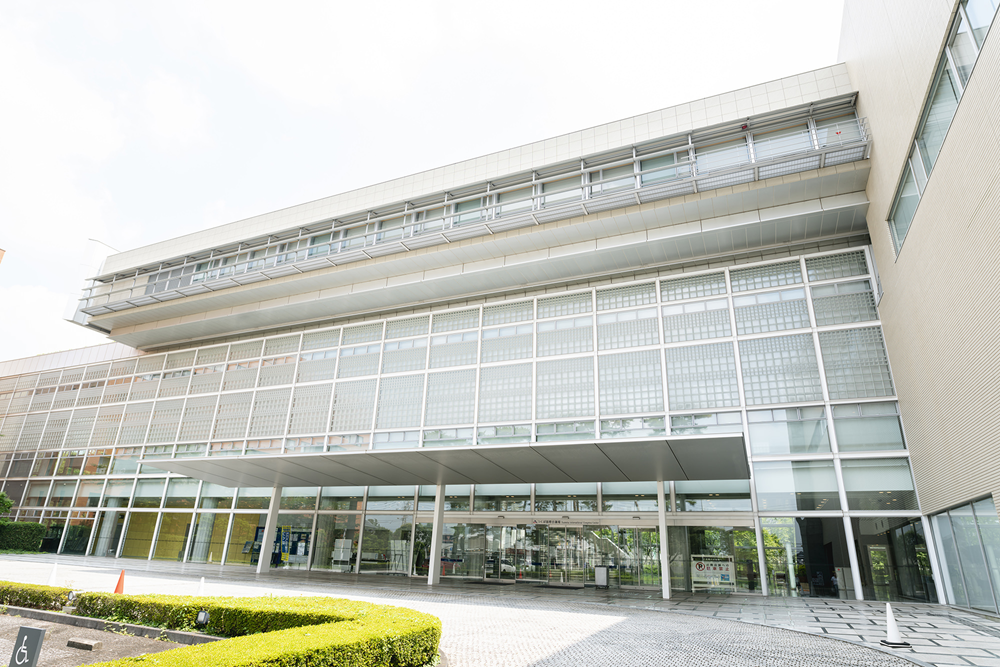
Tsukuba International Congress Center (EPOCAL TSUKUBA)
- Access and Site Information
- Nearby Restaurants
- Sight Spots
- Dinner
- Ground Transportation
Access and Site Information
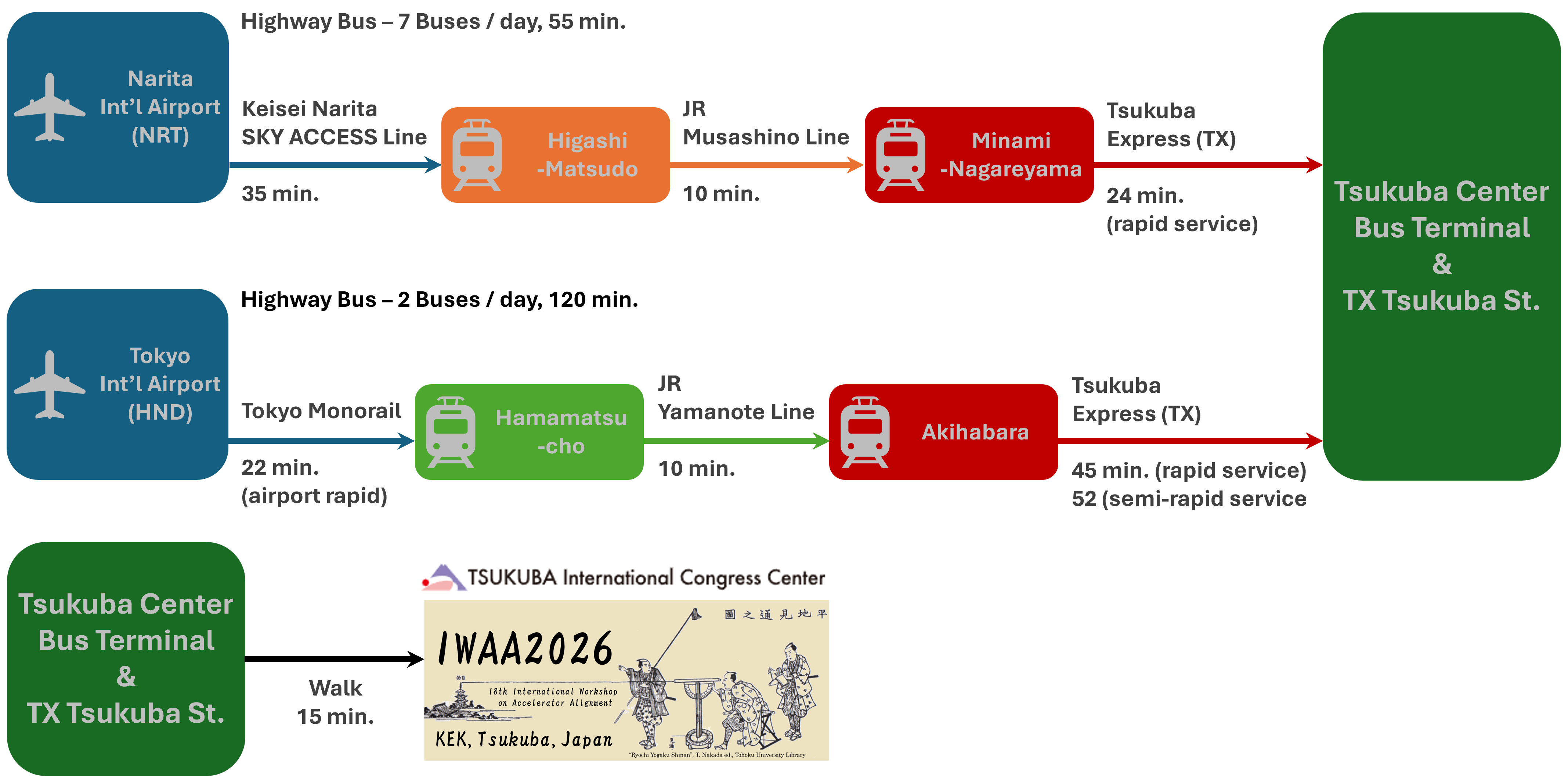
It takes about 15 minutes on foot from TX Tsukuba Station to Tsukuba International Congress Center. TX Tsukuba Station has exits A1 to A5, but please exit at A3 to get to ground level (map).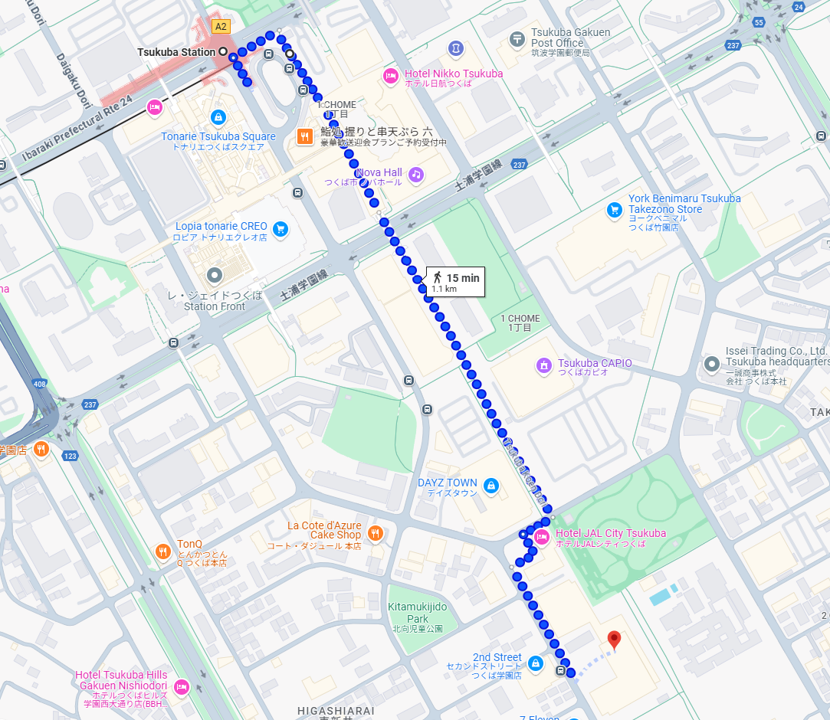
The Ice Breaker Party on the first day will be held at Ristrante TSUMU on the first (ground) floor of the Tsukuba International Congress Center. Registration and all oral presentations will be held in Convention Hall 200 on the second floor, and poster presentations will be held in Rm. 201B on the same floor. Wi-FI connection will be also available and its connection information will be provided at the time of registration. Note that eduroam is not available.
Nearby Restaurants
Noodles and Ramens
1. Aoba (map)
Soy-sauce ramen or tsukemen. Tsukemen is a Japanese noodle dish consisting of separate serving of noodles and soup.
2. Katsuryu (map)
In addition to tsukemen with soy sauce or chicken-based soup, they also offer soy sauce ramen, seafood ramen, and gyoza (dumpling).
3. Men-ya Aoi (map)
The miso ramen is popular. Because it is a popular restaurant, there is a line even for weekday lunches, but the wait is not so long than expected.
4. Sobaichi (Lunch only, map)
In addition to cold and hot soba (Japanese classical noodle), they also offer tempura and set menus. Tempura is a Japanese dish of lightly battered and deep-fried vegetables, seafood, or meat. Note that, people with buckwheat allergies should avoid it as it can cause anaphylactic reactions.
5. Aoyama Garari (map)
Soba and udon. Rice bowls topped with tonkatsu and tempura are also recommended. Tonkatsu is a pork cutlet. Note that, people with buckwheat allergies should avoid it as it can cause anaphylactic reactions.
Set meal
1. Tonkatsu Ton Q (map)
Set meals; tonkatsu or seafood cutlet, rice, salad, and miso soup are popular. Tasty.
2. Poco Loco (map)
Spanish dining, serving paella, pizza, grill plates, and chicken over rice.
3. Greenroom (map)
Hawaiian dining, serving salad, pasta, burgers, and set meals.
Sushi and Oden
1. Kintaro-zushi (map)
You can enjoy sushi at the counter, prepared and served by the chef himself. In addition to sushi, you can also enjoy boiled or grilled fish, seafood, and seasonal vegetable tempura. You can order your favorite sushi from the English menu, but we also recommend ordering the chef's choice. There are always at least three types of sake available, even if they are not on the menu.
2. Hanabi (map)
Oden is a Japanese hot pot dish consisting of various ingredients such as boiled eggs, daikon radish, and fishcakes, simmered in a soy-flavored broth. Oden goes extremely well with sake, especially hot sake. All of the dishes are inexpensive and highly satisfying.
Sight Spots
Welcome to Japan, a land in the Far East.
Every year, Japan attracts many tourists from all over the world.
Asakusa and Kyoto are famous tourist destinations in Japan, but many of the experiences you can have there have been tailored for foreign tourists.
Since you've taken the time to come to Japan on a long journey, why not experience real Japanese culture firsthand?
Below we introduce some special experiences carefully selected by the chairman.
1. Kasamayaki and Satonohomare
Kasamayaki is pottery primarily for everyday use that began to be produced in the Kasama area, 40 km northeast of Tsukuba, in the mid-Edo period. Recently, due to its design, it has also begun to be used in European restaurants.
In the same city of Kasama, there is Sudohonke, said to be the oldest sake brewery in Japan, founded over 800 years ago. Sudohonke's Sake; Satonohomare is characterized by its dry, clear taste and is loved by many fans both in Japan and overseas. It seems that tours of the brewery are not currently available, but you can purchase sake directly from the brewery, which is housed in a beautifully appointed Japanese-style house.
Kasamayaki official site:
https://kasamayaki.or.jp/en/
Sudohonke official site:
http://www.sudohonke.co.jp/en/
2. Ohmiya BONSAI Village
Bonsai is a culture that expresses natural scenery with plants planted in small flowerpots, and in recent years has gained many fans from overseas.
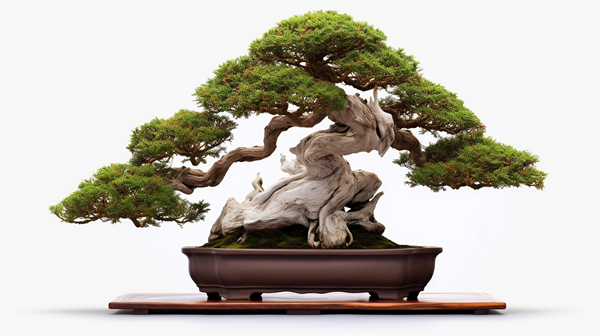
Ohmiya Bonsai Village was founded by gardeners who once managed the gardens of Edo feudal lords' residences, but who made a living from bonsai. They moved to Bonsaicho, Kita-ku, Saitama Prefecture after the Great Kanto Earthquake in 1923 and began cultivating bonsai, which continues to this day. Some people from overseas have apprenticed to local bonsai artisans and are now active as full-fledged bonsai artisans. It is possible to purchase bonsai, but please note that if you take them out of Japan you will need to go through the necessary quarantine procedures.
https://www.bonsai-art-museum.jp/en/about/omiya/
3. Kabuki Theater (Kabukiza)
Kabuki is a form of theater established in the Edo period. In addition to classical plays, you can also enjoy new plays based on anime titles if you have the opportunity. Classical plays have also been incorporated into Joruri, Gidayuu, Rakugo, and Kodan, so understanding Kabuki will give you an understanding of a wide range of Japanese classical performing arts. Earphone guide services are available in English, Chinese, Korean, and French for all Kabuki performances. You can also enjoy a Japanese lunch box and drink while watching the performance.
The Kabukiza is located in Ginza, Tokyo, and can be reached in up to 1 hour and 30 minutes by train and foot from Tsukuba Station. Since It is also very close to Tsukiji, where the old fish market was located, so you can enjoy Sushi after the show. See their official site https://www.kabukiweb.net/theatres/kabukiza/kabukiza-information/ for more details.
Dinner @ Hitachino
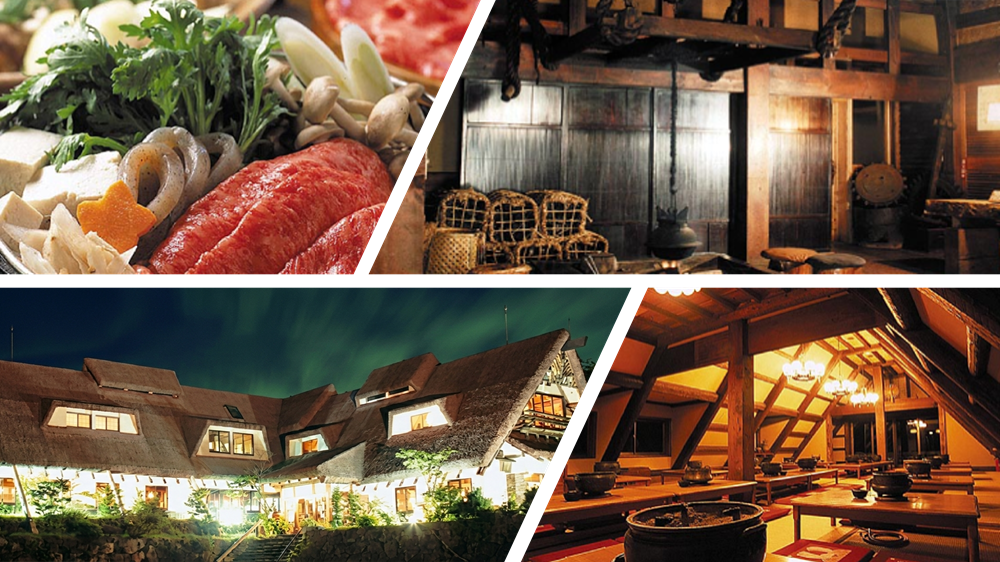
Savor Premium Hitachi Wagyu in a Historic Architectural Masterpiece
Located in Tsukuba, Hitachino offers a unique 'farm-to-table' experience featuring one of Japan’s top beef brands: Hitachi Wagyu.
What sets this restaurant apart is its breathtaking atmosphere. The building is a massive, traditional folk house (Kominka) with heavy wooden beams and a thatched-roof style, transported from the mountains of northern Ibaraki.
- The Beef: They serve high-grade Hitachi Wagyu from their own 'Sakura Ranch.' The marbling is exquisite, offering a melt-in-your-mouth texture.
- The Style: It can be served charcoal grilled, sukiyaki, or shabu-shabu, but this time we will enjoy it in the sukiyaki style, which is also popular with foreigners. Ibaraki is the only prefecture in Japan that boasts a large vegetable production volume. Fresh vegetables can be enjoyed in salads and shabu-shabu, so vegans will surely be satisfied.
- The Setting: With views of Mount Tsukuba adorned with autumn foliage, this setting is perfect for a special occasion.
It is more than just a meal; it is a journey back to old-world Japan.
Ground Transportation
There are several international airports in Japan, but if you are coming directly to Tsukuba, we recommend choosing Narita International Airport or Tokyo International Airport (Haneda Airport) as your final arrival airport. The main means of transportation from each airport to Tsukuba International Congress Center are train and bus, and the connections and travel times are as shown in the diagram below.
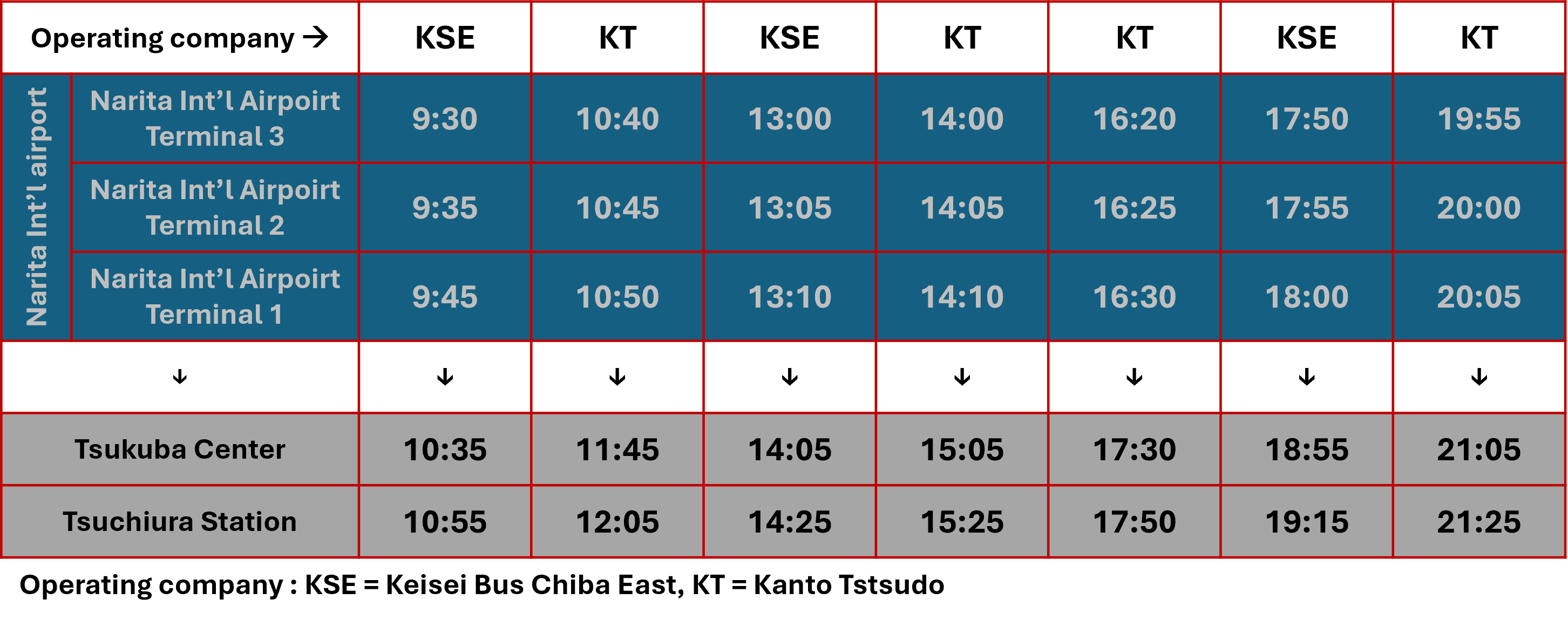
The bus timetable from Narita International Airport to Tsukuba Center is as shown in the table below.
Note : This is information only, not an endorsement of any company or service.